


THE SHORT VERSION: The best tongkat ali supplement is tested by an outside lab, dosed in the studied range, and labeled so you can see exactly what you're getting. A big extract ratio like "100:1" describes how the extract was made. It isn't a potency score, so judge the whole label, not one number. Prime Labs Tongkat Ali Plus gives you 400 mg of tongkat ali root extract per serving in a fully disclosed, third-party tested men's formula with no proprietary blend.
Tongkat ali is a root extract with real human research behind it and a market full of bottles you can't verify. Some are excellent. Some don't contain what the label says. We make a tongkat ali supplement, so we've had to answer this question for ourselves. Here are the six markers we use to judge any tongkat ali, ours included, plus the red flags that should end the conversation.
What Makes a Tongkat Ali Supplement "the Best"?
Proof, transparency, and a dose that matches the research. The best tongkat ali supplement is tested for contaminants by an outside lab, discloses every dose, and doesn't promise more than the evidence supports.
Start with how supplements are regulated. The FDA doesn't approve dietary supplements before they're sold. The manufacturer is responsible for making sure a product isn't contaminated or mislabeled.[1] That means the quality of any bottle depends on the company behind it, not on a government check at the door.
Tongkat ali makes that matter more. It's a tropical root (Eurycoma longifolia) harvested mostly in Southeast Asia, and the U.S. Department of Defense's supplement-safety program warns that tongkat ali products have been found contaminated with heavy metals or spiked with prescription drugs.[2] So "best" isn't about the boldest claim on the front of the bottle. It's about which label holds up when you turn it around. The six markers below are how to check.
Marker 1: Has It Been Third-Party Tested for Contaminants?
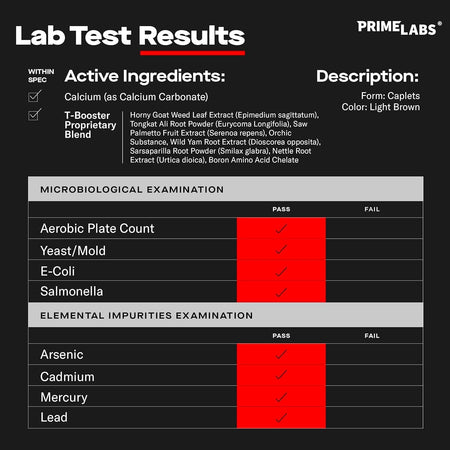
Make this your first filter. Without testing by an outside lab, you have no way of knowing whether a batch carries heavy metals or something that shouldn't be there at all.
The risk is on the record. When researchers tested 100 tongkat ali products sold in Malaysia, 36% contained mercury above the national safety limit, including some registered products. Results also varied from batch to batch, so one clean test said nothing about the next.[3] In another case, Singapore's health regulator found a "tongkat ali" capsule spiked with undeclared tadalafil, a prescription drug that can cause serious reactions in some people.[4] Neither finding says anything about a specific product on shelves today. Both show why testing is the line between a supplement and a gamble.
Look for: "third-party tested" on the label, meaning an outside lab checked the product, not just the manufacturer's own claim.
Ask for: the certificate of analysis (COA), the lab report showing what a batch was tested for and the results.
Know what a seal means: NIH notes that seals from testing organizations show a product was properly made, contains what the label lists, and doesn't carry harmful contaminant levels. Seals don't tell you a product is safe or effective.[5]
Prime Labs Tongkat Ali Plus is third-party tested.
Marker 2: Is Every Dose Disclosed, and in the Studied Range?
You should see one clear milligram number for tongkat ali, and it should land between 100 and 400 mg a day. That's the range the human research actually used.
The best-known placebo-controlled trials gave participants 100 mg, 200 mg, or 300 mg a day of a standardized root extract over 4 to 12 weeks.[6][7][8] NIH's LiverTox database lists 100–400 mg a day as the typical range.[9] A label that hides the amount, or lands far outside that window, leaves you guessing.
Look for: a single disclosed milligram amount of tongkat ali per serving, plus a separate amount for every other ingredient.
The approach we don't recommend: proprietary blends. A blend lists one total weight for several ingredients and keeps the split secret. You can't compare that to a study dose, and you can't tell whether the tongkat ali is a real dose or a sprinkle.
The approach we don't recommend: megadosing. Some bodybuilding products sell 1,000–1,600 mg a day.[9] More isn't better when the research stops at 400 mg.
Prime Labs Tongkat Ali Plus lists every ingredient with its own dose. Each 2-capsule serving delivers 400 mg of tongkat ali extract, the top of the studied range. We suggest one serving a day. For how to dose it and what the label means, see our tongkat ali dosage guide.
Marker 3: Does the Label Tell You What Kind of Extract It Is?
It should name the plant part and the extract type. Tongkat ali research is built on root extracts, and a good label tells you whether you're getting a root extract, a ratio extract, or a standardized one.
Here's how to read the three labels you'll see most:
Standardized to eurycomanone: eurycomanone is the main quassinoid in the root, meaning the bitter plant compound researchers use as a fingerprint to confirm what's in an extract.[10] Malaysia's national standard for tongkat ali water extract calls for 0.8–1.5% eurycomanone plus minimum protein, polysaccharide, and glycosaponin content.[7][11] A stated percentage means the batch was measured for a specific marker.
Ratio extract (like 100:1 or 200:1): the ratio describes how much raw root went into making the extract. It's a manufacturing description. No peer-reviewed or official standard defines what a ratio has to contain, so two "100:1" products can differ.
"Root powder" with no extract claim: ground root, not a concentrated extract. That's a different material from what the trials used.
What "100:1" Does and Doesn't Tell You
A ratio tells you the extract is concentrated. It doesn't tell you it's "100 times stronger." Potency depends on which compounds made it through extraction, and a ratio doesn't measure that. Read a ratio as one honest piece of information on the label, not a ranking. We break the math down in Tongkat Ali Dosage: How Much Per Day, and What "100:1" Means.
Prime Labs Tongkat Ali Plus uses a 100:1 tongkat ali root extract and says so on the label. It isn't labeled with a eurycomanone percentage, and we don't claim a standardization we haven't printed.
Marker 4: Does the Label Match What the Research Actually Shows?
Trust the label that stays inside the evidence. Tongkat ali's research is promising and specific, and a good brand describes it that way.
The strongest testosterone findings came from older men whose levels started low. In a 12-week trial in men aged 50 to 70 with testosterone below 300 ng/dL, 200 mg a day was linked to higher total testosterone than placebo.[7] In healthy men aged 30 to 55, testosterone didn't change significantly, but sexual well-being and libido scores improved over 12 weeks.[8] A 2022 meta-analysis found a positive overall effect on total testosterone, with stronger results in men with low baseline levels and high variation between studies.[12]
Two things follow for anyone shopping:
Be skeptical of "clinically proven." Supplements can say an ingredient is clinically studied. "Proven" outcomes on a bottle are a sign the brand is selling past the evidence.
Watch for borrowed research. Most positive trials used one branded, standardized water extract (Physta®), and several were funded by its manufacturer.[7][8] Those results describe that extract at those doses. They aren't automatically the results of any other bottle, ours included.
We lay out the full picture in Tongkat Ali and Testosterone: What the Research Actually Shows. The short version: tongkat ali supports healthy testosterone levels within the normal range, along with drive and libido.* The testosterone research is strongest in older men.
Marker 5: Does the Formula Fit Your Goal?
Pick the format that matches what you want. A single-ingredient tongkat ali gives you one variable to judge. A multi-ingredient men's formula pairs tongkat ali with complementary botanicals in one daily serving.
Neither is automatically better. If you want to isolate tongkat ali, go single. If you want a daily men's vitality formula, a multi-ingredient product makes sense, as long as every dose is disclosed (Marker 2). Prime Labs Tongkat Ali Plus is the multi-ingredient type. Here's what's in each 2-capsule serving:
Tongkat Ali Extract 100:1 (400 mg): concentrated extract of Eurycoma longifolia root, included to support healthy testosterone levels within the normal range, drive, and libido.*
Organic Black Maca Root Powder (500 mg): a Peruvian root vegetable traditionally used for vitality. Small human studies on maca and sexual desire are encouraging but preliminary.[13][14]
Tribulus Terrestris Extract (100 mg, standardized to 45% saponins): a flowering-plant extract measured for saponins, its main plant compounds. Included for traditional use in men's vitality formulas.
Horny Goat Weed Extract (75 mg, standardized to 20% icariins): an Epimedium extract measured for icariin, its signature flavonoid. Included for traditional use in men's vitality and libido formulas.
BioPerine® black pepper extract (5 mg): piperine, the compound in black pepper that has been shown to help the body absorb some other compounds, such as curcumin.[15]
Together, the formula supports male vitality and libido, plus energy, drive, and motivation.* One rule: don't stack it with another testosterone-support formula. The ingredients overlap, so you'd double up without knowing your totals.
Marker 6: Can You Verify Who Made It?
Buy from a company that answers questions. A real brand name, a real address, and a willingness to share testing details are part of product quality.
Federal rules require supplement makers to follow current Good Manufacturing Practices (cGMPs), the production standards that help ensure identity, purity, strength, and composition.[1] NIH's complementary-health center warns that what's on a label may not be what's in the product, and that supplements can interact with medications.[16] That's why the seller matters as much as the ingredient.
Look for: a brand with contact details, a clear Supplement Facts panel, and testing it can describe.
Be skeptical of: no-name listings, labels in another language with no English facts panel, and sellers who can't say where the product was tested.
Capsules, Tablets, or Powder: Does the Form Matter?
Choose the form you'll take every day. No research shows that tongkat ali capsules, tablets, or powder work better than one another.
The trials gave a fixed daily amount of extract, usually in capsules, over several weeks.[7][8] No trial compared delivery formats, so the consistent daily dose is what to focus on. That makes the practical differences the ones that count:
Capsules: a measured dose every time, no taste. Tongkat ali root is famously bitter, so this matters.
Tablets: also a measured dose. Tablets usually need more binders to hold their shape, so check the other-ingredients line.
Powder: flexible, but you're measuring by scoop, and the bitterness is hard to hide.
Prime Labs Tongkat Ali Plus comes in plant-based hypromellose capsules: 60 per bottle, 30 servings.
Red Flags That Should Make You Put the Bottle Down
Put it back if a tongkat ali product can't clear these basics. Any one of them is enough.
No mention of testing, or a seller who won't share results.
A proprietary blend that hides how much tongkat ali is inside.
Doses far above 400 mg a day presented as a selling point.
"Clinically proven," "works like a prescription," or disease claims. A product marketed for a disease is legally a drug, not a supplement.[1]
Fast-acting sexual promises. Tongkat ali research measured changes over weeks. A product promising effects within hours is the profile regulators flag for hidden drugs.[4][16]
"Pure" or "natural" as the whole pitch. There's no regulated definition of "pure tongkat ali." Ask what was tested, not which adjective was printed.
How Does Prime Labs Tongkat Ali Plus Stack Up?
Here's our own product scored against the same six markers. We built it to clear them, and we're straight about the two places where we don't match the research product.
| Marker | Prime Labs Tongkat Ali Plus |
|---|---|
| Third-party tested | Yes. |
| Every dose disclosed | Yes. No proprietary blend. Tongkat ali 400 mg per serving. |
| Extract type stated | Yes: 100:1 root extract. Not labeled with a eurycomanone percentage. |
| Claims match the research | Structure/function claims only, with "within the normal range" on testosterone.* No "proven" outcome claims. |
| Formula fits a goal | Multi-ingredient men's formula: tongkat ali, maca, tribulus, horny goat weed, BioPerine®. |
| Clean extras | Non-GMO, plant-based capsule, no synthetic hormones. |
Worth knowing: Tongkat Ali Plus itself hasn't been tested in a clinical trial, and it doesn't use the branded extract from the studies. The research describes what tongkat ali root extract can do at studied doses. It isn't a promise for any single bottle, ours included. Results may vary.
Before you start, read Is Tongkat Ali Safe? Talk to your doctor first if you take prescription medication or have a medical condition.[16]